
Event follow up is one of the easiest places for communication to become heavy. Messages grow longer, detail piles up and students skim past what matters.
Most follow up messages fall down for the same reason. They try to do too much at once. Students usually want three things after an event. Confirmation that they attended or registered. A reminder of why the event mattered to them. A clear sense of what happens next. When messages stick to this shape, they feel helpful rather than overwhelming.
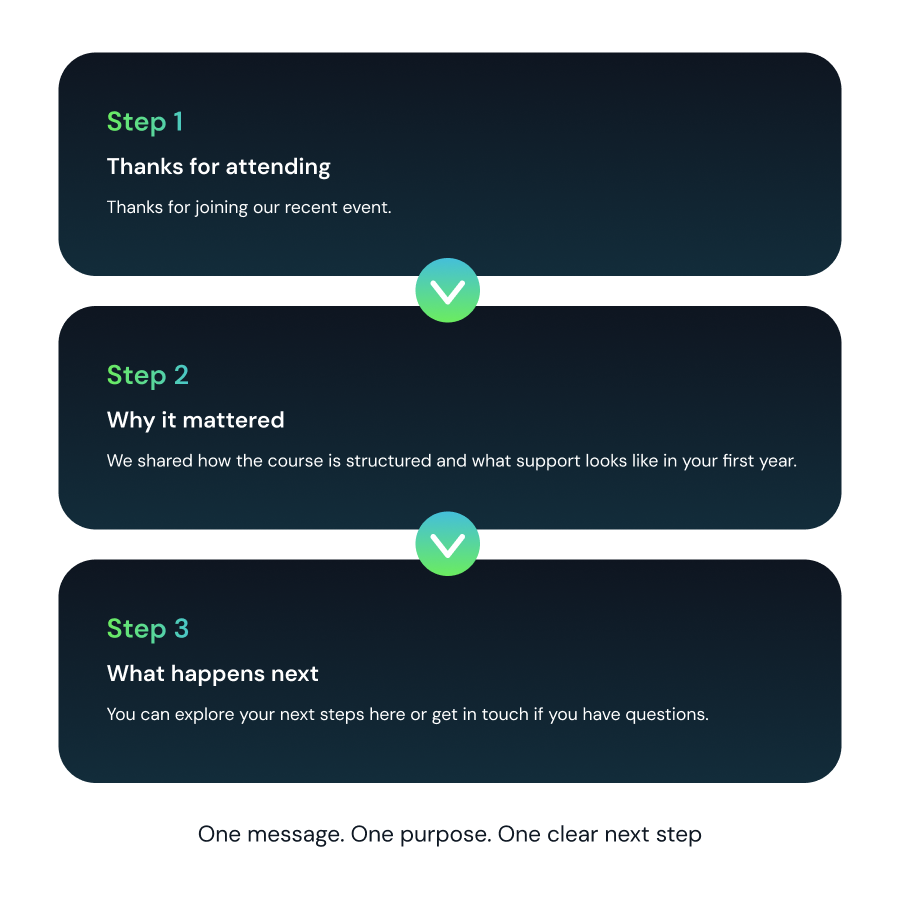
A short thank you that references the event helps the message feel personal. One or two lines that reinforce value help students orient themselves. A clear next step gives confidence, whether that is booking another session, reviewing information or simply knowing what to expect.
It also helps to remember how these messages are read. Students often open follow up emails on their phone, between other messages, while travelling or at work. Plain language, short sentences and generous spacing make a real difference at this point in the cycle.
Information overload usually comes from good intentions. Teams want to be thorough, so everything gets included. In practice, linking out to additional detail and keeping the message itself light works far better. It reduces noise and makes it easier for students to act.
If you want a quick improvement, look at your longest follow up message. Remove anything that does not help the student today. Make the next step obvious. Clear follow up builds confidence for students and consistency for teams, without adding extra work.
