
By this point in the cycle, event calendars are full, inboxes are busy and offer holder conversations are happening at pace. This is usually where segmentation becomes either a quiet help or an extra source of confusion.
The most effective segmentation models are simple. The goal is not to personalise everything. It is to make messages feel relevant enough that students understand what to do next and feel confident acting on it.
In practice, a small number of signals does most of the work. Subject area often shapes what students care about at this point. Location can influence tone and timing, especially around events. Engagement level helps decide whether someone needs a reminder, a follow up or reassurance. You do not need more than this to get started.
What matters is how those segments change the message. A student who attended an event might receive a short follow up that references the format and clearly explains what happens next. Someone who registered but did not attend may need reassurance and a clear option to re engage. Often the difference is just one or two lines, but that small shift changes how the message feels.
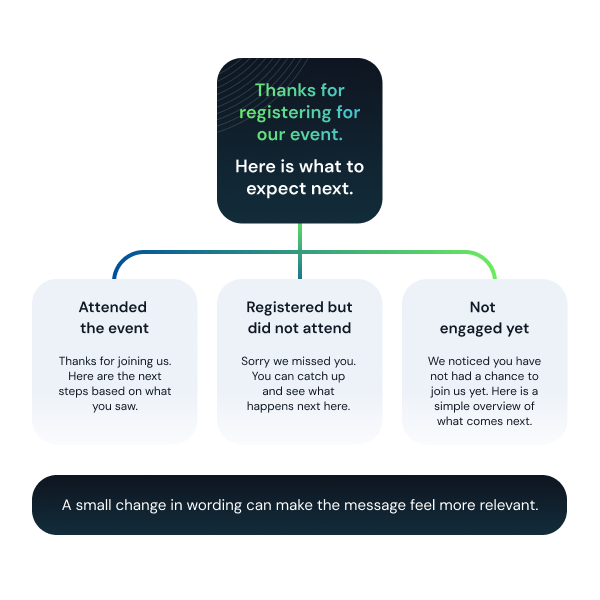
This is also where segmentation helps reduce inbox noise. Messages that feel relevant are easier to understand and less likely to trigger follow up questions. Generic messages often create uncertainty, which then lands back in the inbox as extra work for teams.
If you want to make progress quickly, start with one message. Split it into two versions based on attendance or engagement. Tighten the opening so it speaks directly to that group. Remove anything that is not needed today. These changes take minutes, but they change how the whole journey feels for students and teams.
Segmentation works best when it supports clarity rather than complexity. When the logic is easy to see, it becomes a practical tool rather than another thing to manage.
