
By this point in the cycle, many of the major recruitment events have passed and attention is shifting towards offer holder engagement. Teams are still busy, but the work now is often about helping students feel confident in their next step.
At this stage many students are weighing their options. They are comparing offers, revisiting information and deciding where they feel most certain about accepting. The role of communication becomes less about persuasion and more about reducing uncertainty.
This stage can feel deceptively complex. When there are fewer big moments left in the calendar, it is tempting to increase communication in the hope of improving conversion. Messages multiply, reminders appear more frequently and inboxes become harder to navigate.
In practice, the most effective changes at this stage are usually smaller and calmer. Students respond better to communication that reduces uncertainty rather than adding urgency.
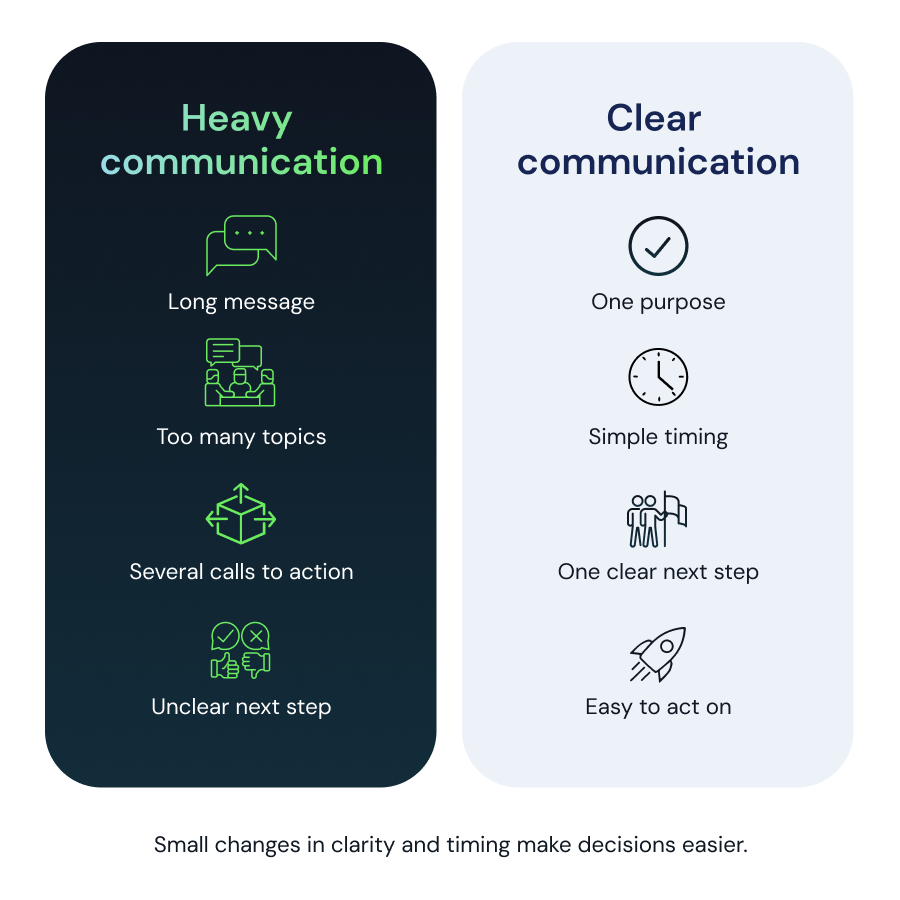
One pattern shows up in almost every cycle. When teams feel pressure to improve conversion, communication often becomes heavier. Messages try to cover several topics at once or repeat information students have already seen. The intention is helpful, but the result can make it harder for students to understand what matters most.
Clarity becomes the most powerful tool here. Students are usually looking for a simple sense of progress. They want to know where they are in the process, what the next step is and whether they are on the right track. Messages that answer those questions clearly build confidence and make decisions easier.
Timing also plays an important role. Communication that arrives at predictable moments in the journey tends to feel supportive rather than intrusive. A short reminder before an event, a clear follow up afterwards and a message that explains what happens next often works better than several messages trying to achieve the same thing.
Busy teams sometimes create confusion unintentionally. A single message might reference an event, include accommodation information, highlight funding support and encourage another visit. Each point is useful on its own, but together they can leave students unsure about what action to take.
High performing admissions teams tend to share a few quiet habits at this stage of the cycle. Messages focus on one purpose. Communication is spaced so it feels steady rather than overwhelming. Clarity is prioritised over volume. These habits reduce pressure for both students and staff.
This moment in the cycle also quietly sets the tone for what comes next. The communication patterns teams rely on now often carry into the next phase of recruitment. Clear timing, simple messages and supportive nudges build trust regardless of the stage of the journey.
If you want to steady the final stage of the cycle, start small. Look at one message and make it clearer. Remove anything that is not needed today. Add a short line that explains what happens next.
Small changes in clarity and timing often make the biggest difference at this point in the cycle.
